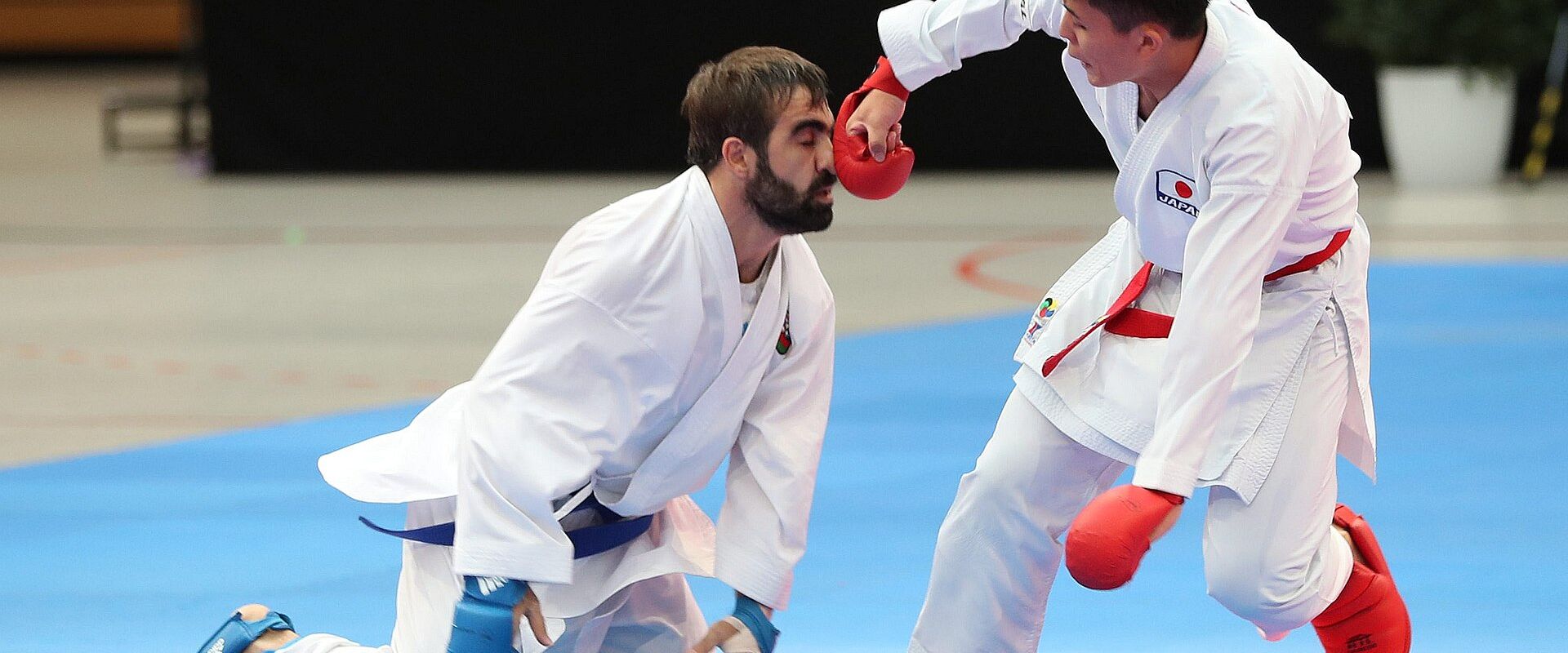
Karate tournaments, managed with precision
PlayMetric handles kumite brackets, kata scoring panels, and division scheduling so you can run a professional competition across all categories without the administrative burden.
Sound familiar?
Running karate tournaments shouldn't be this hard
Kumite and kata divisions create scheduling conflicts
Athletes competing in both sparring and forms events need gap time between rings. Managing overlapping schedules manually leads to missed calls, delayed bouts, and frustrated competitors.
Kata judging scores are hard to collect and average
Gathering scores from 5-7 judges, dropping highs and lows, and calculating final placement takes time. Paper-based scoring is slow and error-prone, delaying results between rounds.
Too many divisions to manage on paper
A typical karate tournament has kumite divisions by weight, age, and belt rank, plus kata divisions by age and level. The combinatorial explosion of categories overwhelms organisers using spreadsheets.
How it works
Three steps to a better tournament
Set up kumite and kata divisions
Define weight classes, belt ranks, and age groups for kumite. Set up kata categories with compulsory or open-choice forms. PlayMetric generates draws for every division.
Athletes register for their divisions
Share a registration link. Karateka sign up for kumite, kata, or both, selecting their weight class, belt rank, and age group. Coaches can register their entire dojo at once.
Run bouts and score kata live
Enter kumite bout scores by ring. Judges submit kata scores from their devices. PlayMetric calculates placements, advances brackets, and publishes results as they happen.
Formats
Every karate format, covered
Single Elimination (Kumite)
Seeded knockout bracket for point sparring divisions. Standard format for kumite at most national and international competitions, with repechage for bronze medal bouts.
Round Robin Pools to Elimination (Kumite)
Athletes compete in pools first, then top scorers advance to elimination rounds. Ensures more mat time for competitors and more accurate seeding for the knockout phase.
Flag System Kata
Two competitors perform kata side by side. Judges raise flags to indicate the winner. The winner advances in a single-elimination bracket. Fast and visual for spectators.
Point-Score Kata
Judges score individual kata performances on technical accuracy and presentation. High and low scores are dropped, and the average determines the ranking. Used for larger kata divisions.
Team Kata
Teams of three perform synchronised kata and are scored on timing, technique, and coordination. A separate division from individual kata with its own brackets.
Built for karate organisers
Whether you're running a local club night or a regional championship, PlayMetric adapts to how you organise karate.
- Open style tournaments — Multi-style karate competitions with kumite and kata divisions for Shotokan, Goju-Ryu, and other styles, running on 4-8 rings over a full day.
- Federation championship qualifiers — WKF-style competitions with strict weight divisions, seeded draws, and panel-scored kata, where results determine national team selection and ranking points.
- Dojo interclub competitions — Small to mid-size events where 3-6 dojos bring their students to compete across belt rank divisions, with an emphasis on participation and development.
No app install. No special hardware. Just a browser.
FAQ